




Gross is a clinical associate professor of law at the University of Wisconsin Law School and director of the school’s Public Defender Project.
What can a felon do? Become president of the United States.
What can’t a felon do? That’s quite the list.
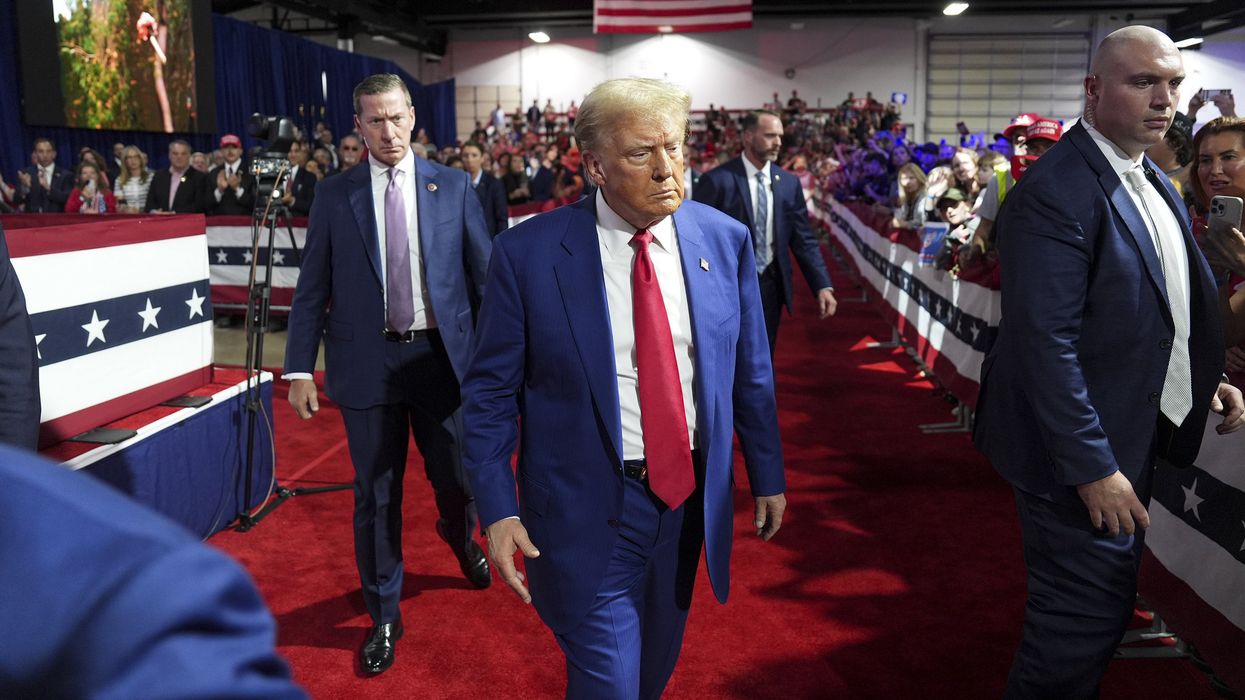
Ever since Donald Trump was found guilty of falsifying business records back in May — something that hasn’t changed despite the fact he has managed to have his sentencing postponed until after the election — people have asked me, a law professor, whether a convicted felon can be elected president of the United States. So let me break it down.
The Constitution lists only three requirements to hold the office of president: The person must be a natural-born citizen, be at least 35 years old and have lived in the United States for at least 14 years. The natural-born citizen requirement was put in place to prevent a member of a European monarchy from emigrating to the United States and acquiring enough influence to become president. The age and residency requirements had a similar goal: to prevent the children of influential politicians who spent time outside the United States from getting elected solely on name recognition.
While the drafters of our Constitution envisioned the possibility that a president would commit “high crimes and misdemeanors” in office and created the mechanism of impeachment to remove that person from office, they never conceived of the need to point out the obvious: that someone already convicted of high crimes would be an exceptionally poor choice to be president.
When Alexander Hamilton publicly confessed to an extramarital affair with a married woman, the consensus was that his private infidelity made him unsuitable to hold public office. Fast forward almost 250 years: Trump, a man who served as president and wants his old job back, has been convicted on 34 felony counts of falsifying business records to cover up an extramarital affair.
What do they have in common? Like Trump, Hamilton made what could be regarded as hush-money payments to cover up his affair. But unlike Trump, Hamilton chose to reveal the affair to convince his political opponents that he hadn’t falsified records while serving as the secretary of the treasury.
Hamilton’s reputation suffered greatly, and his presidential ambitions were squashed, but he was never charged with, let alone convicted of, a crime. The drafters of our Constitution regarded his poor moral judgment enough to disqualify him.
Meanwhile, Congress and state legislatures have routinely imposed far-reaching “collateral consequences of conviction” on people convicted of crimes. They are barred from employment, housing, public benefits, educational opportunities and even participation in our democracy.
These sanctions are imposed automatically upon conviction in addition to whatever sentence a judge might impose. They reflect a moral judgment that people who commit crimes have placed themselves in a separate class of citizens who can be legally discriminated against.
With that in mind, consider such consequences in Florida, where Trump resides. He would be potentially disqualified from a wide range of jobs, including some of the ones he has previously held: He could be denied a license to run a hotel or restaurant, to operate as a real estate broker and even to sell lottery tickets.
Consider as well the contradiction between all the various responsibilities of the president of the United States and all the jobs that convicted felons are deemed too irresponsible to have.
Perhaps the most absurd result of another Trump presidency would be that the commander in chief of the U.S. armed forces, who possesses the power to use nuclear weapons, would be barred by federal and state law from owning a firearm.
Along similar lines, the president is the head of federal law enforcement with pardoning power. Yet he doesn’t meet the minimum qualifications to be a law enforcement officer in Florida because he was convicted of a crime involving a false statement. And he would likely be barred from serving on Florida’s parole commission.
On the diplomacy front, the president can negotiate a ceasefire between warring factions such as Russia and Ukraine, but Trump’s conviction would likely bar him from serving as a court-appointed mediator in his home state.
There are other elements of irony in the ways a felon president cannot participate in some basic processes of government: Trump would not be able to lobby Congress or even serve as a presidential elector.
He also would have the power to issue an executive order ending birthright citizenship. Setting aside the fact that such an order would be blatantly unconstitutional, it is worth noting that his felony convictions for falsifying business records are crimes of “moral turpitude,” a category of crimes that would bar him from becoming a citizen if he wasn’t born in the United States.
One study estimates that there are over 27,000 rules that bar people convicted of crimes from holding professional licenses. A report by the Heritage Foundation found that many of these barriers to employment are counterproductive and actually increase rates of recidivism.
But if there is one collateral consequence of a felony conviction that makes perfect sense is that you shouldn’t be eligible to serve as president of the United States. Even if your sentencing has been delayed until after the election. The fact that this is not even a talking point one month before the election is beyond belief.








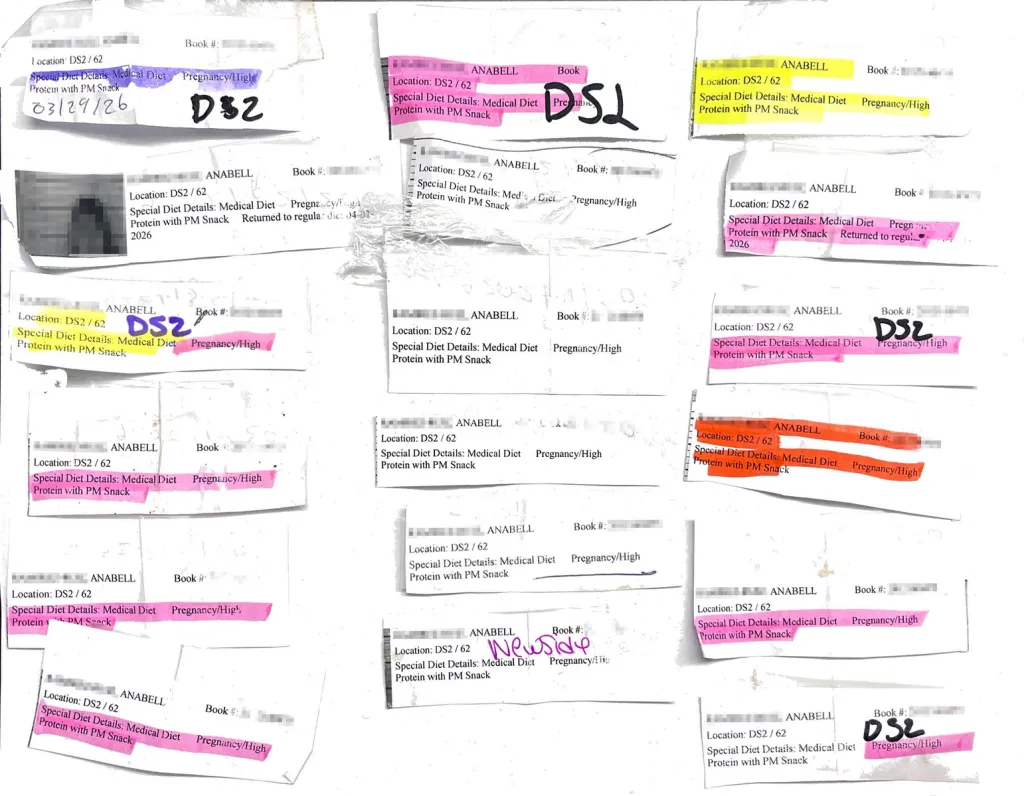 Copies of several meal stickers affixed to Anabell’s food throughout the month of March, shared with The 19th by her lawyer, show that the Immigration & Customs Enforcement (ICE) agency was offering a modified diet. (National Immigrant Justice Center)
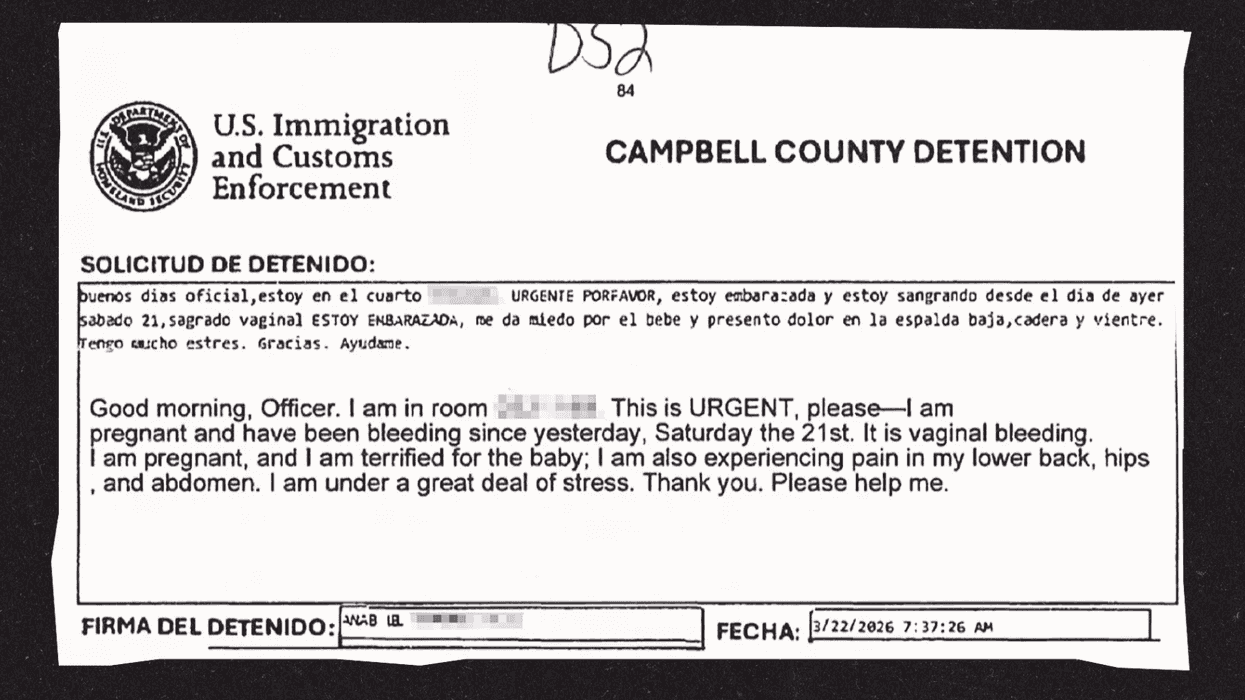
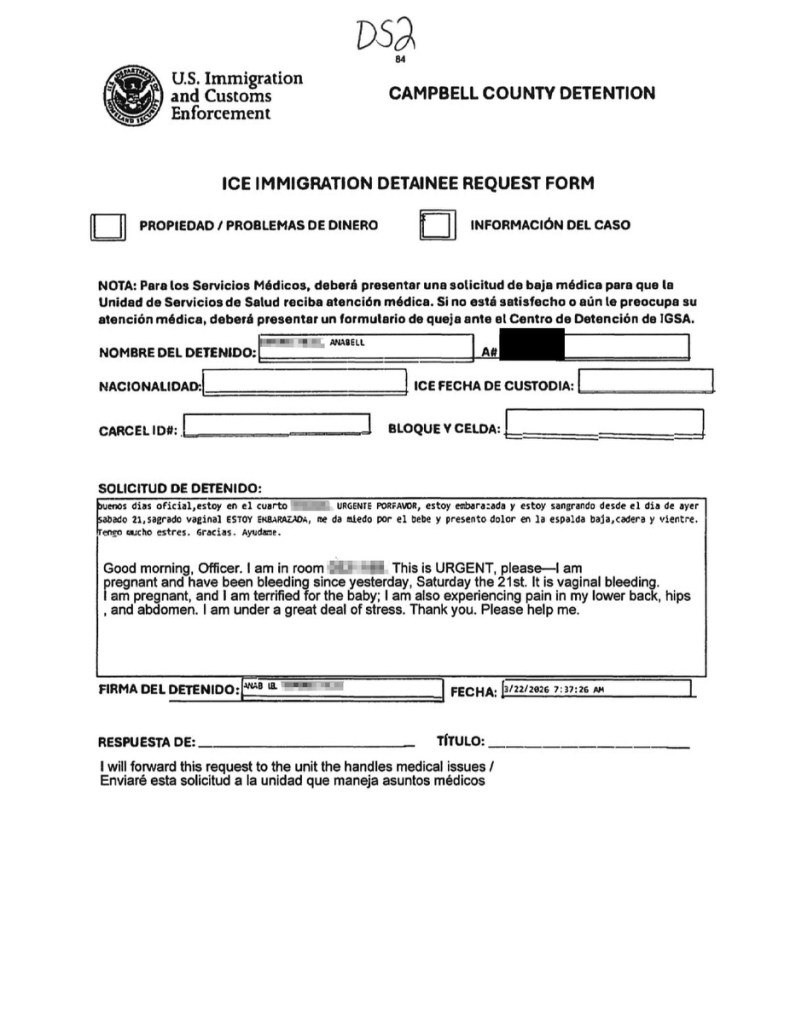 Data released by the Department of Homeland Security shows that almost 500 pregnant, nursing or postpartum women had been detained between January 2025 and mid-February of this year. (National Immigrant Justice Center)